
Criminal Cases in the Sac County Courts
Sac County has one unified Iowa District Court, not separate county, justice, and municipal criminal courts. District judges ordinarily handle felonies. District associate judges hear serious and aggravated misdemeanors and some felonies, while magistrates handle simple misdemeanors and initial appearances. City ordinance cases also enter this state court structure, even when a city attorney prosecutes them.
The clerk is the custodian of the judicial file. That file may hold the complaint or trial information, docket, hearing notices, motions, orders, judgment, sentence, and debt entries. The sheriff cannot certify those court records, and the clerk cannot supply an arresting officer's investigative narrative. Sac County criminal case research works best when the requester identifies the product first.
The Judicial Branch overview of Iowa District Court shows how the single trial-court system is organized.
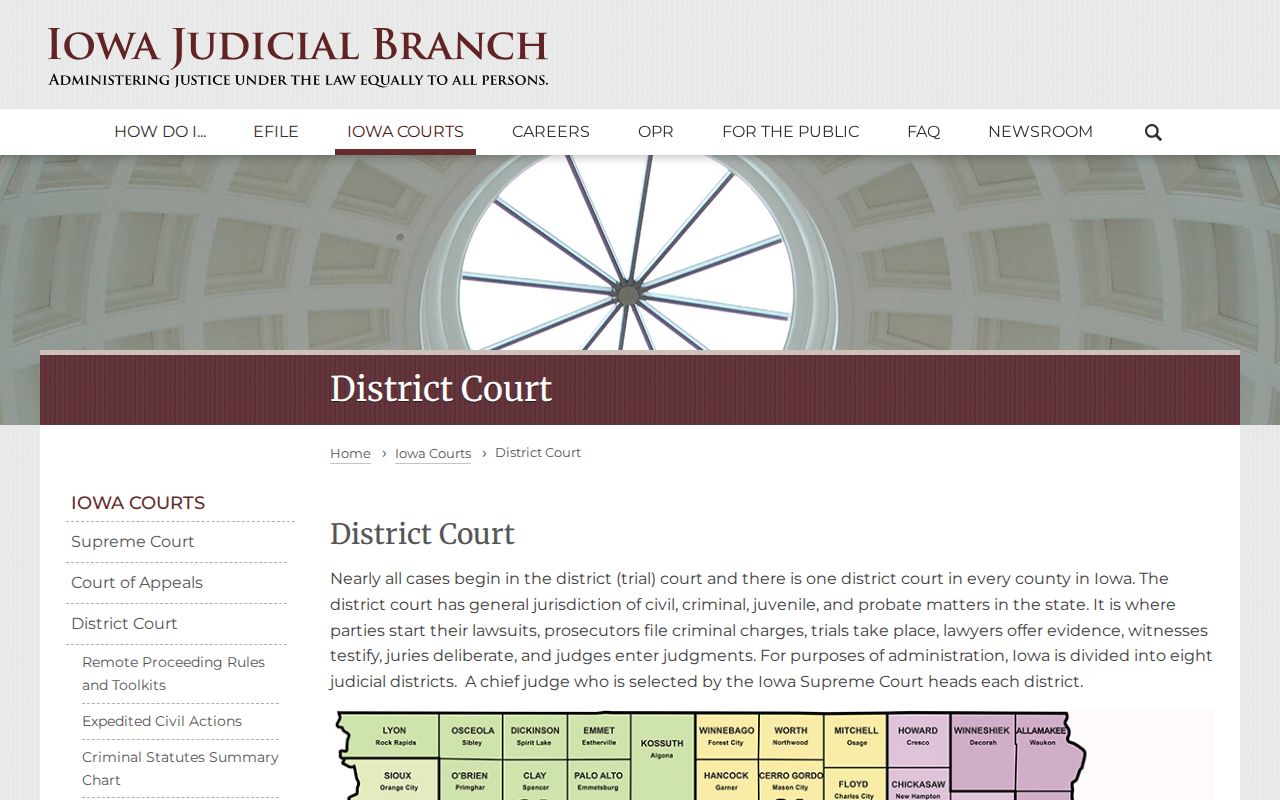
That statewide structure explains why Sac County felony, misdemeanor, and ordinance dockets appear in the same court system.
Sac County Criminal Case Codes
The case number helps a reader separate case level from outcome. FECR identifies a felony criminal file. AGCR covers aggravated misdemeanors and other indictable criminal matters. SMCR identifies a simple misdemeanor file. These labels describe the court case type when opened; they do not prove the charge survived unchanged or led to a conviction.
Read the filed charge, disposition, and sentence as distinct fields. A prosecutor may amend the arrest charge, a plea may resolve a different count, and a judgment may dispose of only part of a multi-count case. Likewise, the word “closed” describes docket status, not guilt. Open the recorded order before drawing a conclusion from a short index label.
Other docket terms also need context. “Initial appearance” is the first court review after an arrest, not a trial. “Counsel appointed” identifies representation and says nothing about the result. A “warrant issued” entry should be followed forward for a return, recall, or later order. Financial assessments and payments belong to the case ledger but do not, by themselves, reveal which count produced the debt. Reading each label in date order keeps a Sac County criminal case from being reduced to one misleading line.
How to Search Case Records
Iowa Courts Online Search provides a free, limited statewide index for cases entered in Iowa's court information system. Begin with few fields. A full case number is strongest; otherwise use a surname and select Sac County. Adding a middle name or narrow case type too soon can hide a valid result when the index omits or formats that detail differently.
- Open Iowa Courts Online and choose the case-number or party-name search path.
- Enter the full case number when known, or start with the legal surname and first name.
- Select Sac County and use case type only when it helps narrow several sound matches.
- Confirm the party, county, filing date, case type, status, charges, and disposition before reading the docket.
- Call the Sac County clerk for a pleading, order, transcript route, ordinary copy, or certified record not supplied online.
| Field Label | Type | Required | Use |
|---|---|---|---|
| Case Search or Name Search | Choice | One path | Choose the identifier available to you |
| Case Number | Text | Path dependent | Use the full Iowa court number |
| Last/Firm Name | Text | Name path | Try legal surname variants separately |
| First and Middle Name | Text | Optional | Narrows matches but may exclude a sparse index |
| County | Dropdown | Optional | Select Sac for the local court file |
| Case Type | Dropdown | Optional | Includes felony and misdemeanor categories |
The official Iowa Courts Online gateway is the source for the search controls shown here.
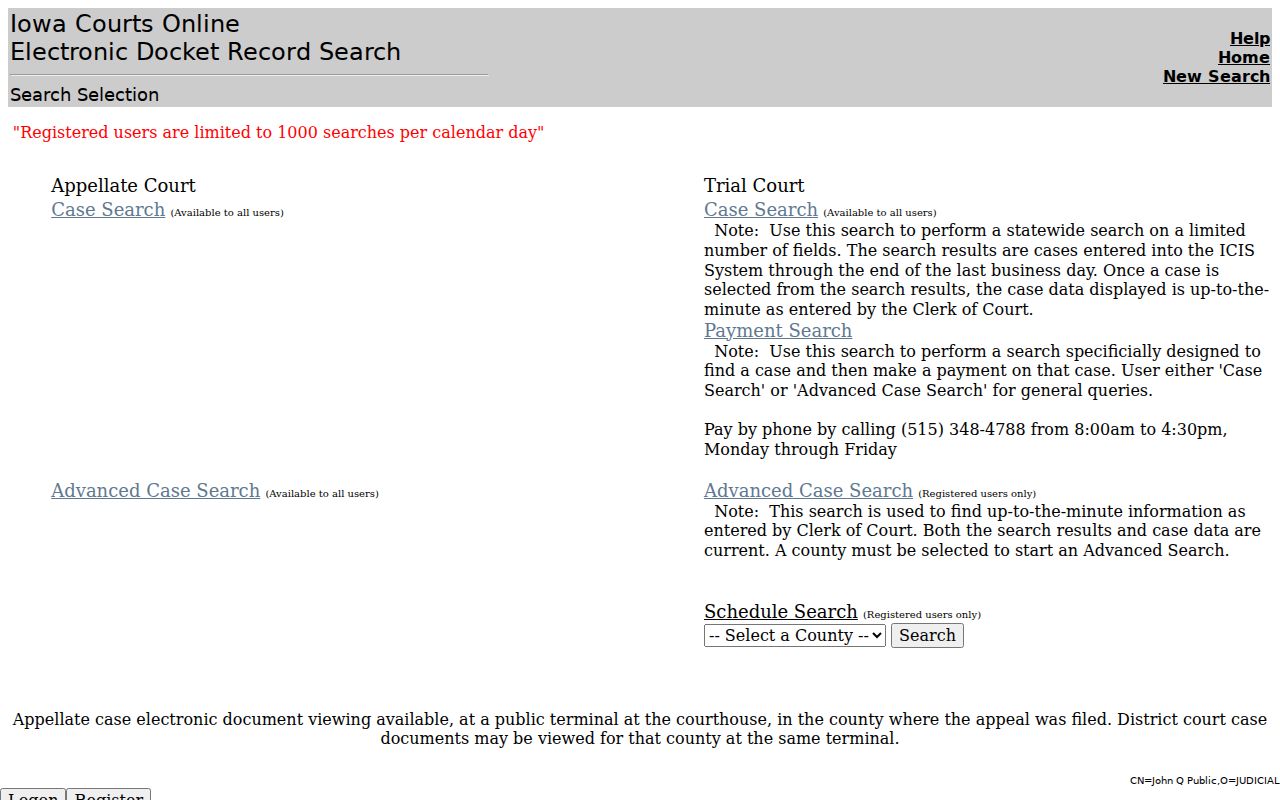
The image marks the correct statewide starting point, while the Sac County filter keeps local results in view.
Sac County Criminal Clerk Requests
A public index may show that a filing exists without offering the filing itself. For a missing or older Sac County criminal case document, contact the clerk with the case number, document title, and docket date. Ask whether inspection, an ordinary copy, certification, or delivery is available and what current fee applies. No current Sac-specific judicial copy fee was found, so it should not be guessed.
Sac County District Court Clerk
100 NW State Street
Sac City, IA 50583
712-662-7791
Filed criminal cases, judgments, certified records, older files, and court debt.
The official Sac County District Court directory confirms the local clerk route.
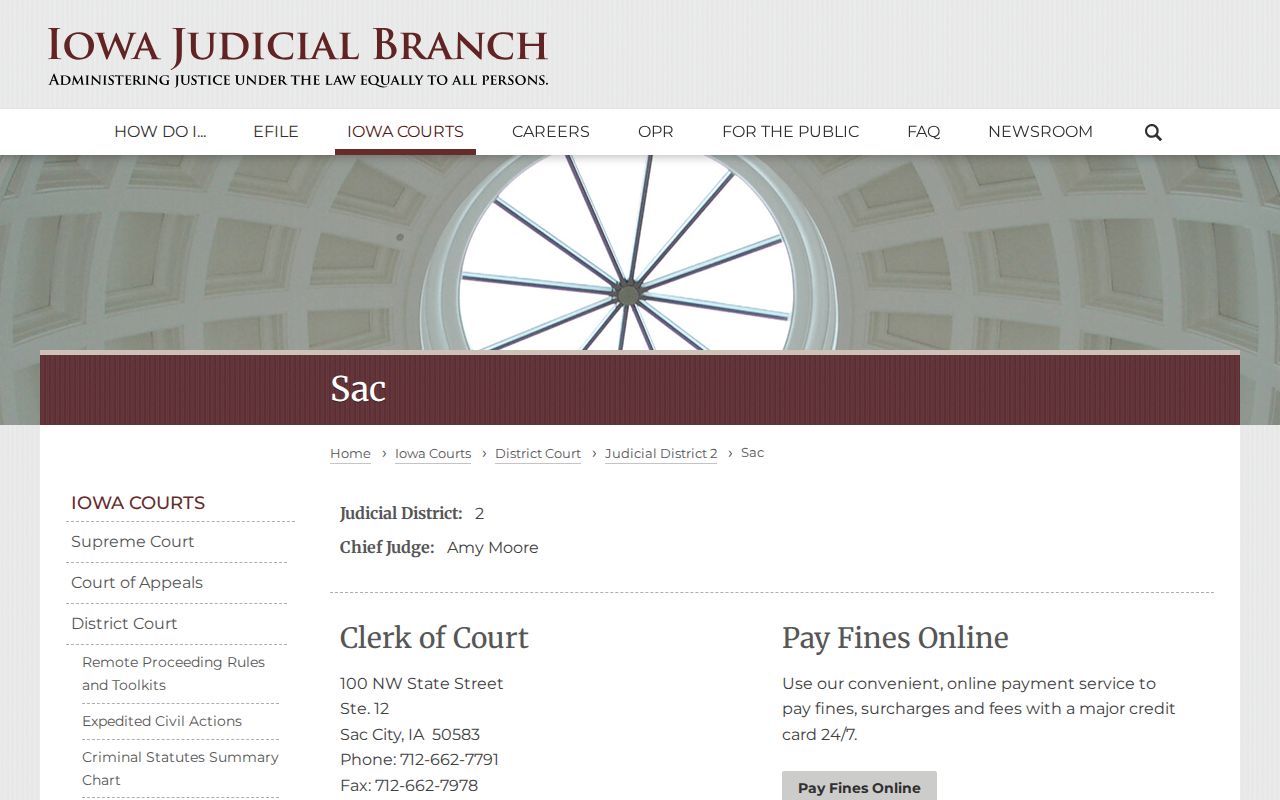
This court listing is the sound source for current local routing when an online docket does not include the needed document.
What the Case File Shows
A Sac County court file records prosecution after filing. It does not replace the police report or jail booking sheet. The best reading method is chronological: identify the charging document, follow the docket events, open the order that resolves a motion or count, and then read judgment and sentence together.
| Case Number and Court | Identifies Sac County, the case type, and the specific judicial file. |
|---|---|
| Charging Document | States the charge filed by complaint or trial information, which may differ from the arrest charge. |
| Docket Entries | Lists recorded filings, appearances, motions, notices, hearings, orders, and financial events by date. |
| Hearing Dates | Shows scheduled events; a listing alone does not prove that the hearing occurred. |
| Disposition and Judgment | Records dismissal, acquittal, conviction, plea, or another court result. |
| Sentence and Conditions | May state incarceration, a suspended term, probation, fines, or other ordered terms. |
Note: A docket entry confirms that an event was recorded, but only the filed order supplies the court's full language.
Sac County Criminal Charging Review
The Sac County Attorney reviews law-enforcement referrals and prosecutes state-law crimes and county ordinance violations. The office also handles juvenile delinquency and related public duties, but it is not the custodian for a court jacket and does not act as private counsel. Questions about a filed copy still go to the clerk.
Charging review explains why an arrest label can differ from the later Sac County criminal case. A jail record captures charges as booked. The prosecutor may file, amend, add, or decline charges after reviewing the report. The court docket then records what was actually filed and how each count ended.
The official Sac County Attorney page identifies the office and its public duties.
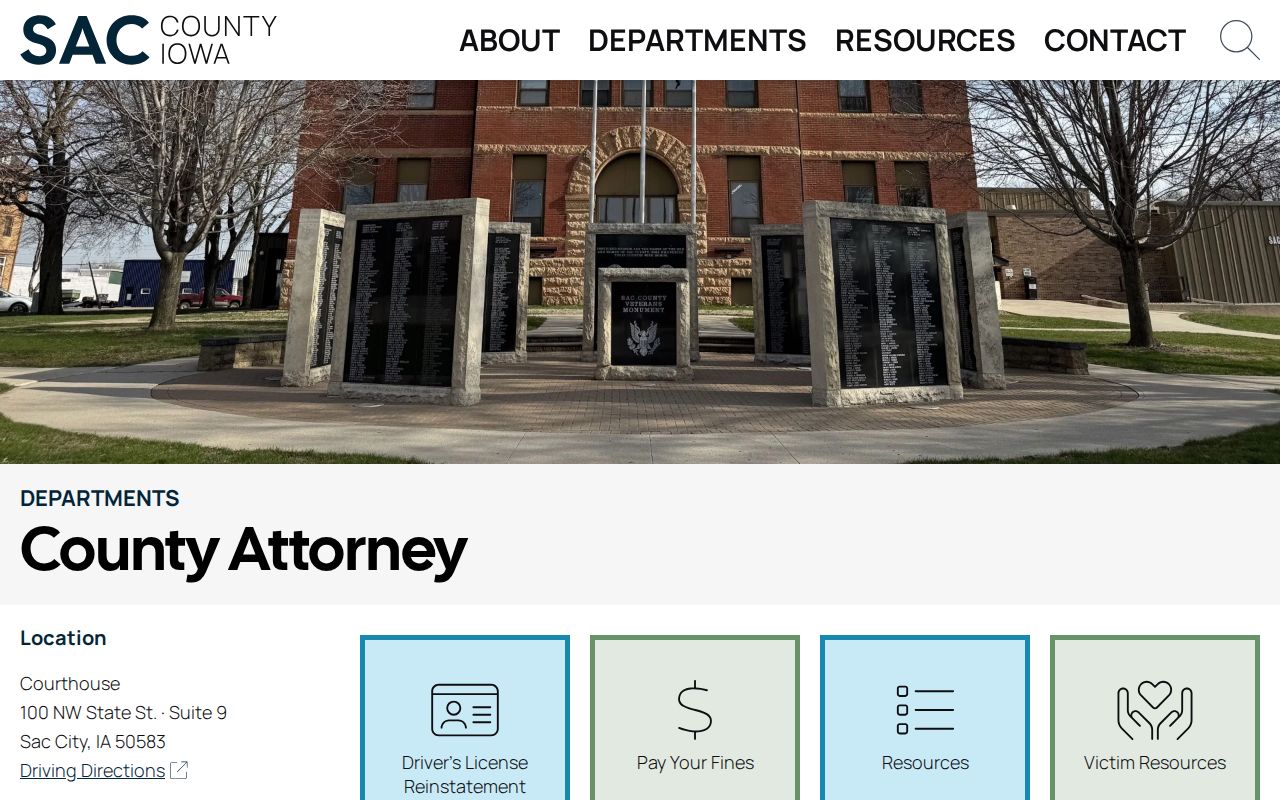
The office image reinforces the key division: prosecutors file the charge, while the Judicial Branch keeps the court record.
Stages of a Criminal Case
A Sac County criminal case may start with a complaint after an arrest or other law-enforcement referral. The initial appearance addresses probable cause, counsel, release conditions, bond, and the next hearing as applicable. Arraignment frames the plea. Pretrial filings can test evidence or procedure, and the case may then resolve by plea, dismissal, acquittal, or trial judgment.
Case flow: Charges Filed › Arraignment › Pretrial › Plea or Trial › Disposition › Sentencing
The flow is an order of events, not a promised schedule. A short docket label should be checked against the filed order, especially when a hearing was reset, a charge changed, or only one of several counts was resolved.
Sac County Criminal Court Debt
Financial entries can appear alongside the Sac County criminal docket, but a balance is not a plain summary of the case outcome. Read the judgment and assessment entries first. Then use Iowa's official payment service only after confirming the correct case number and amount. A payment event may reflect fines, costs, or other court debt recorded in that file.
The Judicial Branch maintains the Pay a Fine information page for current payment instructions.

This official route helps readers avoid treating an unofficial payment page as proof of what the Sac County court ordered.
Access & Restrictions
Iowa's open-record rules do not make every Sac County criminal case document public. Juvenile court information receives special protection. Sealed and expunged records may be withheld, and public views may redact protected personal, victim, medical, or safety information. A Chapter 22 request to county government cannot bypass a Judicial Branch sealing order.
If a case does not appear, check the spelling, county, and case number before assuming no file exists. Ask the clerk whether the record is older, unavailable online, confidential, sealed, or held in another format. Under Iowa Code chapter 22, requests should name an existing record and its proper custodian. Judicial record access also follows court rules.
Iowa Code chapter 692 governs criminal-history dissemination by DCI, but that repository rule is not the same as access to the clerk's judicial file. A signed release can affect which completed deferred judgments or older unresolved arrests DCI supplies. It does not turn confidential juvenile court material into a public case record. When two official sources differ, compare the case number, arrest cycle, filed disposition, and reporting date before seeking a correction from the office that controls the disputed field.
Sac County Federal Criminal Cases
Federal charges arising in Sac County do not become Iowa District Court cases. They belong to the U.S. District Court for the Southern District of Iowa and will not be fully shown in Iowa Courts Online. Use the federal docket number when possible, because party-name searches can return many matches across jurisdictions.
PACER is the official federal case-record system. It requires an account, and users should review the current fee and waiver policy before retrieving documents.
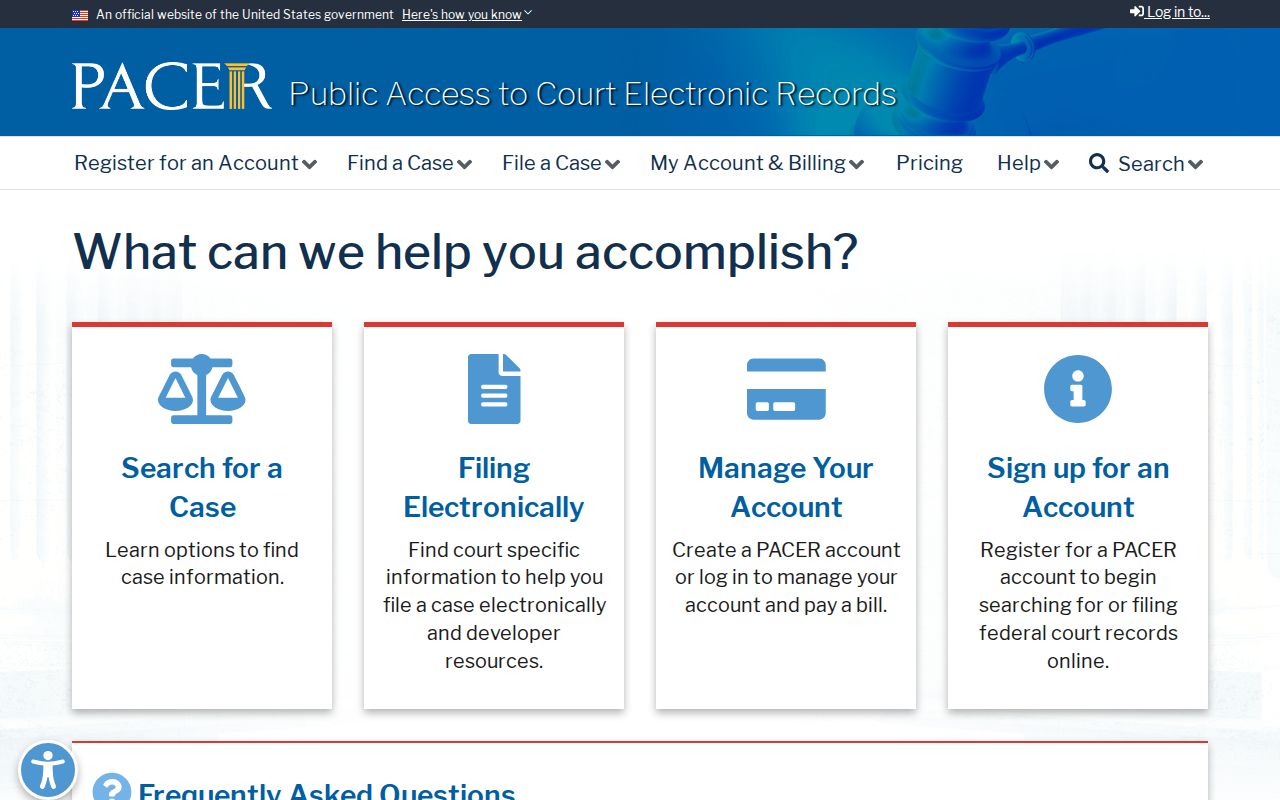
The federal portal is a separate records layer, so a blank Sac County state-court search cannot rule out a federal filing.